A well-made steel fire pit is a decade-plus purchase — but only with twenty minutes of seasonal attention. The failure modes are predictable and cheap to prevent: clogged burner ports, water pooling in the base, an igniter killed by rain. Here is the whole maintenance story.
Monthly During Fire Season: The Burner Check
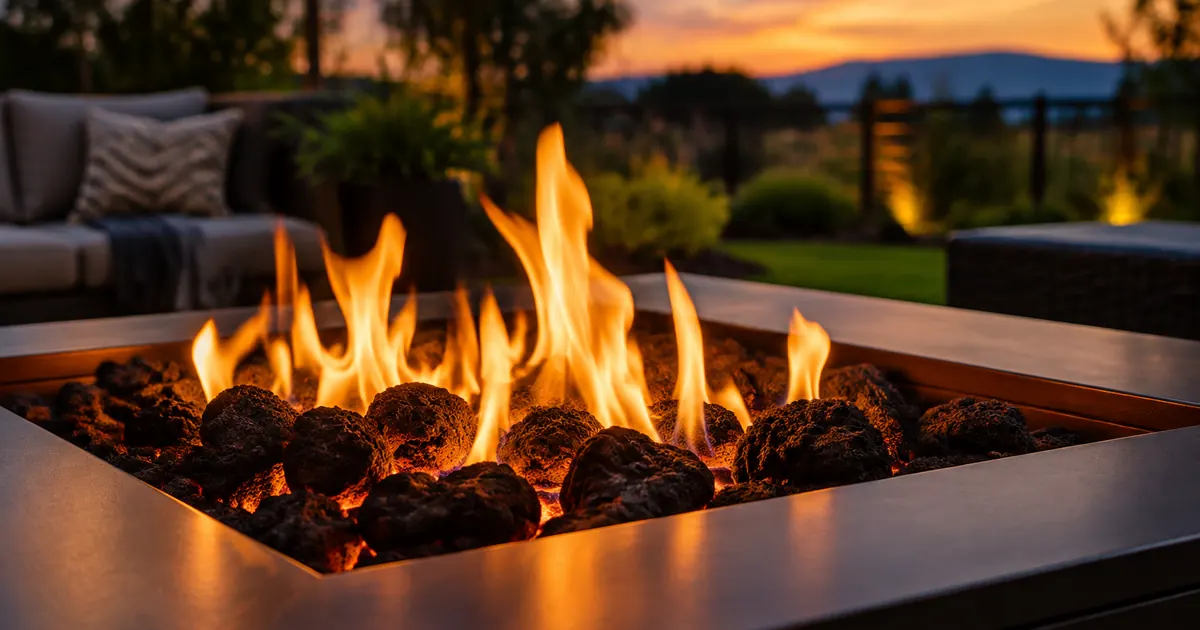
Once a month while you are using it, watch the flame before you light it. You know what your fire pit's flame pattern looks like; when it starts looking lazy, patchy, or taller on one side, the burner ports are partially clogged. The fix takes five minutes: brush the ports with a soft wire brush and clear each hole with a straightened paperclip — never a drill bit, which enlarges ports and changes the air-gas mix. Wipe soot off the fire pit table's concrete top with mild soap while you are at it; grease from s'mores etches stone if it sits.
Lava Rock and Fire Glass Care
The media in your fire pit does more than look good — it spreads flame and holds heat. Twice a season, let the pit cool completely, then lift the rocks out and rinse them in a bucket. Dust and debris clog the gaps between rocks and cause the uneven flames you just cleaned the ports to fix. Replace cracked lava rocks; they pop when heated. If you upgrade to fire glass, it never needs replacing — just the same occasional rinse.
The Cover Habit That Prevents 90% of Problems
Water is the enemy, and not because of rust alone. Rain collects in the burner pan, then rusts the igniter and freezes solid in winter, cracking gas lines. A weatherproof cover — or even a patio umbrella over the unit — after every use is the single highest-leverage habit in fire pit ownership. The powder-coated steel on the Arvico fire pit collection resists corrosion, but the cover is what keeps water out of the works in the first place.
Propane Tank and Connection Checks
Three checks, once a month: the tank sits level in its base (a tilted tank feeds liquid propane and produces soot), the hose shows no cracks where it meets fittings, and the connection passes the soapy-water test — brush dish soap onto the connection with the gas on, and if bubbles form, tighten or replace the regulator before the next use. These are the checks fire departments wish everyone did; they take ninety seconds.
Winterizing (Even in Mild Climates)
- Shut off and disconnect the propane tank; store it upright outdoors, never in a garage or shed.
- Clean the burner and pan one final time so spring you starts clean.
- Dry and cover — or store the pit in a shed if it is small enough. Water that freezes in the burner pan cracks fittings.
- Fire glass and lava rock: bag them dry; they are fine in the shed or under the covered pit.
What NOT to Do (The Three Classics)
Every fire pit repair call starts with one of these. Never dump ice or snow into a warm pit — thermal shock cracks cast burners and ceramic media. Never leave lava rock wet from a rain and light it immediately; trapped water superheats and pops rock fragments several feet. And never store the propane tank connected over winter — a slow leak in a sealed garage or shed is the one genuinely dangerous failure mode a fire pit has. Disconnect, cap, and store the tank outdoors upright.
Igniter Dead? Before You Assume the Worst
Nine times out of ten, a dead igniter is a wet or corroded electrode, not a broken part. Dry it, clean the tip with the paperclip, and check that the battery (if your model has one) is fresh. If it still will not spark, a long-nose lighter lights the pit fine while you wait on a replacement electrode — a $10 part on most units.
The Season-Opening Ritual
Every spring: uncover, inspect the hose, soap-test the connections, clear the ports, rinse the rocks, and do the first lighting with extra attention to the flame pattern. That fifteen-minute ritual is the difference between the fire pit that looks new at year ten and the one that becomes a planter. Everything in our fire pit collection is built with serviceable burners and standard parts — free shipping, no tax, and a cover recommendation on every product page.