Walk into the heater aisle and every box promises the same thing. But infrared, ceramic, and oil-filled heaters produce three genuinely different kinds of warmth, and matching the type to your room matters more than any feature list. Here is the honest comparison.
Infrared: Heat You Feel Instantly
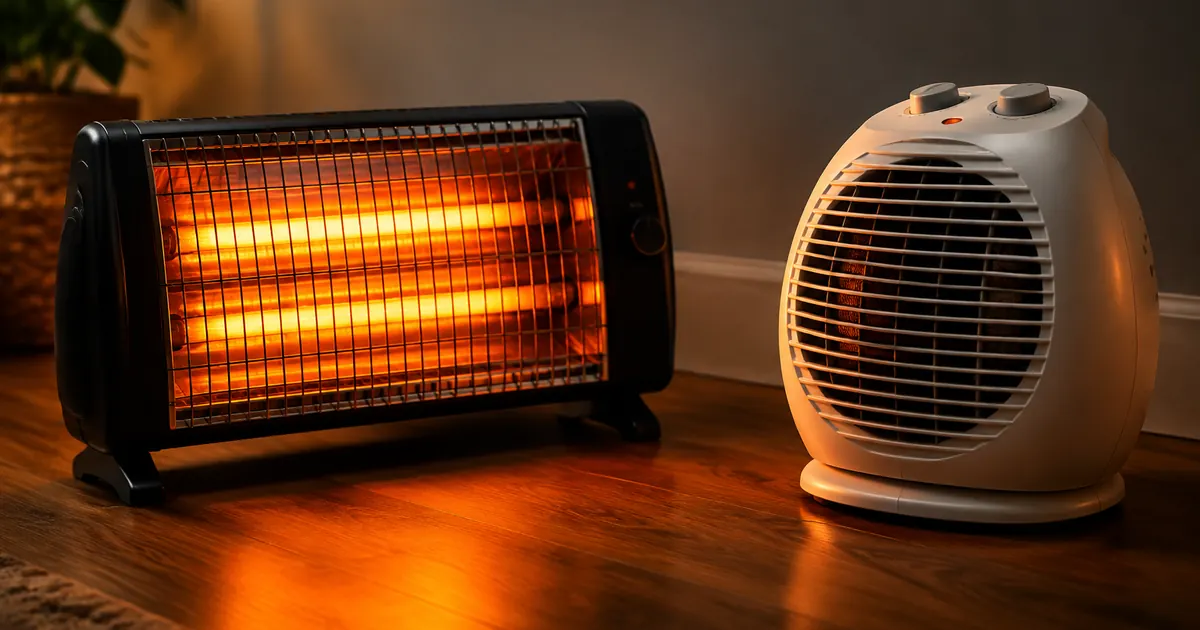
Infrared heaters — like the 1,500W infrared quartz heater — work like the sun: they radiate energy that warms objects and people directly, not the air between. Feel it the moment it turns on, even in a drafty room.
Best for: drafty rooms, basements, workshops, garages, and anyone who wants heat now. Weakness: it is directional — warmth stops when you leave the beam, and it does nothing for an empty room. Noise: silent (quartz) to quiet (fan-assisted). Cost: $80–100, pennies per hour.
Ceramic: The Fast, Focused Workhorse
Ceramic heaters push air over hot ceramic plates with a fan — the 1,500W ceramic heater with adjustable thermostat is the category's benchmark. They heat a small room faster than anything else per dollar, and the thermostat holds a temperature instead of blasting flat-out.
Best for: bedrooms, offices, and any closed room up to about 150 square feet where you want quick, thermostatic heat. Weakness: fan noise — noticeable on high, a non-issue on low. Safety: excellent — ceramic plates self-regulate and cool fast; housings stay cool-touch.
Oil-Filled: The Slow, Silent Steady One
The oil-filled radiator is the opposite philosophy: electric elements heat sealed oil, the oil heats the fins, the fins heat the room — slowly, silently, and then for hours after shutdown as the stored heat radiates out.
Best for: bedrooms (silent), living rooms you occupy for hours, and anyone who wants steady all-night warmth without cycling. Weakness: 20–30 minutes to feel warmth; it heats rooms, not people. Safety: the best in category — no exposed elements, surface stays warm-not-hot, ideal around kids and pets.
Head-to-Head
| Infrared | Ceramic | Oil-Filled | |
|---|---|---|---|
| Warmth feel | Instant, directional | Fast, fills small room | Slow, whole-room |
| Noise | Silent–quiet | Fan noise | Silent |
| Best room | Drafty, basement, garage | Bedroom, office ≤150 sq ft | Living room, bedroom |
| Safety around kids/pets | Good (hot grill) | Very good | Best |
| Runs after shutoff | No | No | Yes — 30+ min |
| Price | $80–100 | $45–90 | $70–120 |
Efficiency: The Honest Version
All three types convert essentially 100% of their electricity to heat — a 1,500W infrared, ceramic, and oil-filled heater cost the same to run per hour. The efficiency difference is in how the warmth is delivered and retained. Infrared feels warmest fastest because it heats you directly. Oil-filled delivers the most even heat because the fins keep radiating after shutdown — you pay for 1,500W and get a 30-minute tail of free warmth. Ceramic splits the difference with fast room fill plus thermostat control. Choose by how you use the room, not by efficiency claims; anyone promising one type "uses less electricity" at the same wattage is selling, not explaining.
The Combo Strategy Most Homes Land On
These are not competing products — they are different tools. The pattern that works: an oil-filled radiator for the rooms you live in for hours, a ceramic unit for the office or bedroom that needs fast morning heat, and infrared for the garage, basement, or porch-adjacent spaces where air heating fights a losing battle. All three together cost less than one month of cranking central heat a few degrees warmer.
Matching the Type to Your Winter
A quick way to decide without overthinking: if you are cold the moment you sit down (desk chair, couch, workbench), infrared. If the room is cold when you walk in and you want it warm in ten minutes (bathroom-adjacent bedroom, home office), ceramic. If the room is always in use and you want it evenly warm all evening (living room, bedroom), oil-filled. Renters and dorm-dwellers: ceramic or panel. Households with toddlers and pets: oil-filled first, panel second. Garage and workshop people: infrared, full stop.
What About Panel, Baseboard, and Fan Heaters?
The rest of the space heater collection fills specific niches: convection panel heaters mount on walls and disappear into the decor — the kids' room pick; baseboard heaters run along floor lines for steady, out-of-the-way warmth; and the compact fan-forced heater is the budget quick-fix for small rooms. Match the tool to the room, and winter stops being a negotiation with your thermostat.