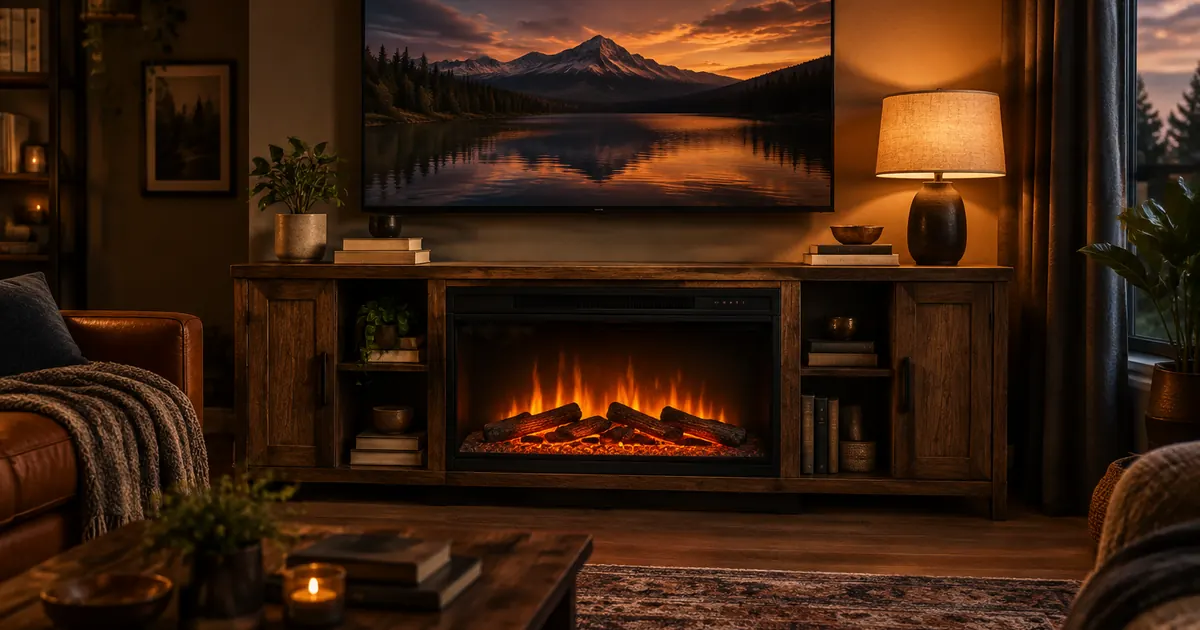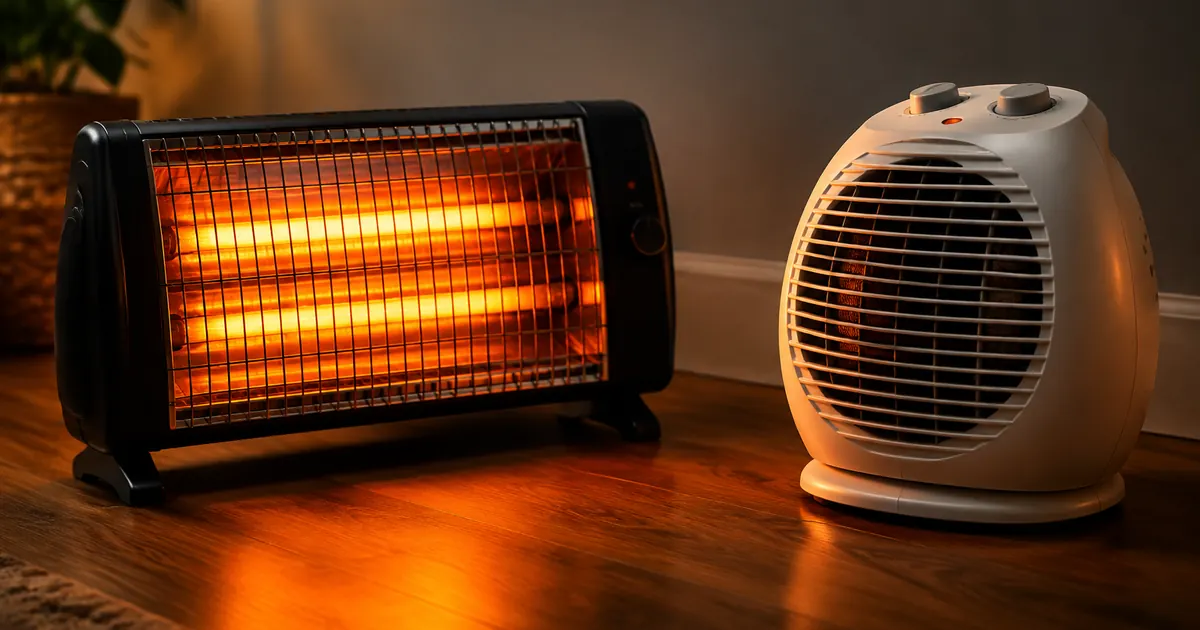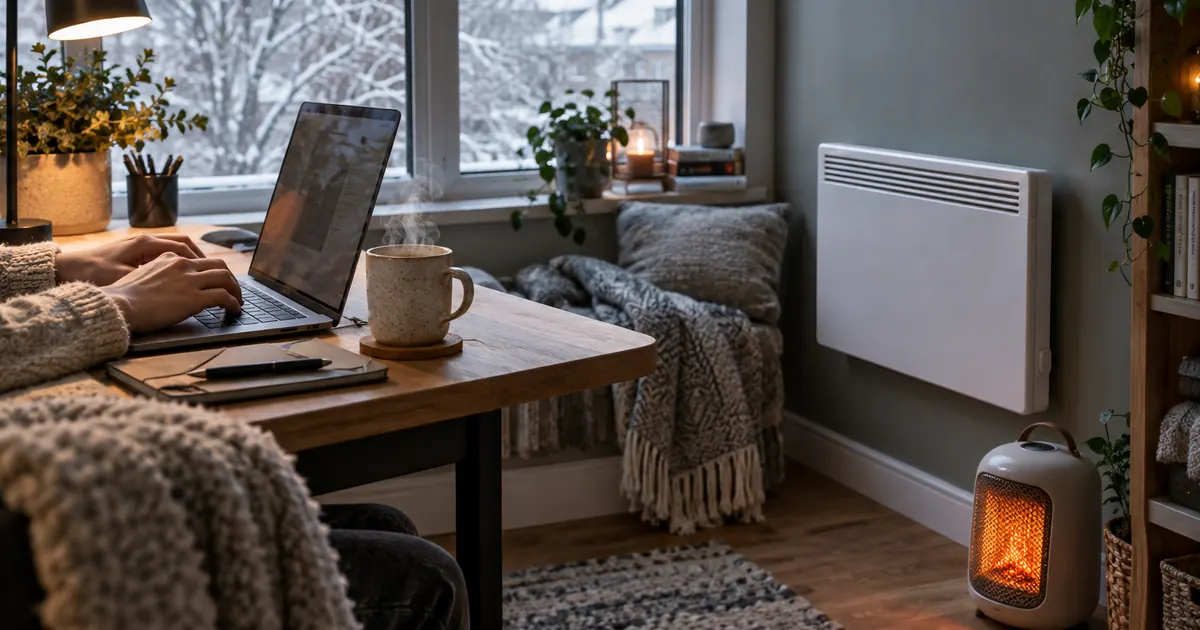
Space heaters cause roughly 25,000 house fires a year, and almost none of those are the heater's fault. Modern units — like everything in our space heater collection — ship with tip-over shutoffs, overheat sensors, and cool-touch housings. The risk lives in how people place and power them. Here is the complete picture.
The 3-Foot Rule (Non-Negotiable)
Keep anything combustible — curtains, bedding, furniture, laundry, the dog's bed — at least 3 feet from every side of a running heater. Most heater fires start when fabric meets a unit that was "only there for a minute." A ceramic space heater on the floor of a bedroom is safe; the same heater on a shelf beside curtains is not. If your room cannot give a heater 3 feet of clearance, choose a wall-mounted panel or baseboard unit instead — they solve the clearance problem by design.
Hard Floors, Stable Ground
Heaters belong on the floor — hard flooring if possible. Carpet is acceptable for units designed for it, but never place a heater on rugs with long pile, on beds, on couches, or on dressers. The industrial-finish portable heater has a low, wide base for exactly this reason. And every heater in a home with kids or pets should pass the nudge test: bump it gently — if it rocks, it is not on stable ground.
The Outlet Rules That Prevent Fires
- Wall outlet, always. Power strips and extension cords are the leading cause of heater fires — a 1,500W heater draws more than most strips are rated for, and the strip melts before the breaker trips.
- One heater per outlet. Two heaters on one circuit trip breakers and heat wiring.
- Inspect the plug. A warm or discolored plug after use means a loose outlet or failing cord — stop using it until fixed.
Tip-Over and Overheat Protection: Test Them
Every quality heater has both. The tip-over switch cuts power when the unit tilts past a threshold; the overheat sensor kills a unit whose intake is blocked. Test the tip-over once a season: run the heater, tip it gently (over carpet), and confirm it shuts off within seconds. If it does not, stop using it. The fan-forced heater and every other unit we carry ships with both protections active.
Room-by-Room Placement That Actually Works
- Bedroom: Floor, 3+ feet from the bed, never pointed at bedding. Oil-filled radiators are the safest pick here — no exposed elements, no fan noise, and the surface stays warm-not-hot. The oil-filled radiator is our pick.
- Home office: Under the desk facing your legs, 3 feet from the chair, on a hard floor mat if you have carpet.
- Bathroom: Only units rated for damp locations, and even then — unplug it when you are done. Steam and heaters are a bad mix.
- Basement/garage: Infrared or fan-forced units on a dedicated outlet; keep them away from paint, solvents, and rags.
- Kids' rooms: Wall-mounted panel heaters or baseboard units — nothing portable, nothing with exposed elements. The white convection panel heater mounts high and out of reach.
Running Costs: What It Actually Costs to Heat a Room
A 1,500W heater costs about $0.15–0.25 per hour to run, depending on your rates — roughly $1.20–2.00 for an evening. The thermostat matters more than the wattage: a heater that cycles off at temperature uses dramatically less than one running flat-out. Zone heating pays for itself when you heat the room you are in and turn the central system down — the infrared quartz heater is built for exactly that pattern.
One Heater or Two? The Circuit Question
Older homes with 15-amp circuits effectively allow one 1,500W heater per room — a second unit on the same circuit trips the breaker within minutes. Newer 20-amp circuits handle two comfortably. The tell: if your breaker trips every winter evening, you are running two high-draw appliances (a heater plus a heater, or a heater plus a kettle) on one circuit. Move one to another outlet on a different wall — different wall usually means different circuit — and the problem disappears. If a breaker trips repeatedly with a single heater, that is an electrician call, not a heater problem.
The Nighttime Question
Sleeping with a space heater running is the highest-risk use there is — you cannot respond to a smell, a sound, or a fallen blanket. If you must, use an oil-filled radiator with a thermostat on the lowest setting that keeps the room comfortable, on the floor, 3+ feet from bedding, plugged directly into the wall. Better: run it for an hour before bed to warm the room, then switch it off. Warm sheets, cold air, zero risk.